








Herkimer County Historical Society

History

Image
Image

History

Herkimer County, composed of nineteen towns, extends from the Adirondacks to the Mohawk Valley. The vast forests to the north provide wood products and the recreational opportunities of the Adirondack Park while the southern valleys are favorable for agriculture and dairying. Various products are manufactured in factories along the Mohawk River and its larger tributaries. Tourism increases yearly due to the Erie Canal, New York State Thruway, and the Adirondacks.

The Mohawks, members of the Iroquois Confederacy, inhabited the area that was to become Herkimer County prior to 1720. The Palatines settled on the Burnettsfield Patent granted by Governor William Burnett in 1723. While thriving on the fertile valley soil and utilizing the available waterpower for mills, the Palatines fought to protect their homes during the French and Indian War and the Revolution.

General Nicholas Herkimer’s force of 800 Palatines succeeded in holding off an attack of British and Indians at Fort Stanwix in 1777, thereby protecting the Mohawk Valley. Fort Herkimer and Fort Dayton provided protection for the settlers who were able to maintain their prosperous farms at the end of the hostilities.

The selling by the state of Sir William Johnson’s large Royal Grant brought flocks of New Englanders who settled north of the Mohawk. They rapidly cut down the virgin forest, burned the wood creating a potash industry, and began to grow wheat. Communities developed near sources of waterpower and soon the hill country was home to many small villages.

When westward expansion provided access to land more suitable for growing wheat, Herkimer County farmers realized that dairying would be a more profitable use of their land. The lack of a mass market for milk led to the production of cheese. By the 1850s Little Falls was the location of a world famous cheese market. Later the railroads gave access to the downstate market for milk and the cheese industry began to decline.

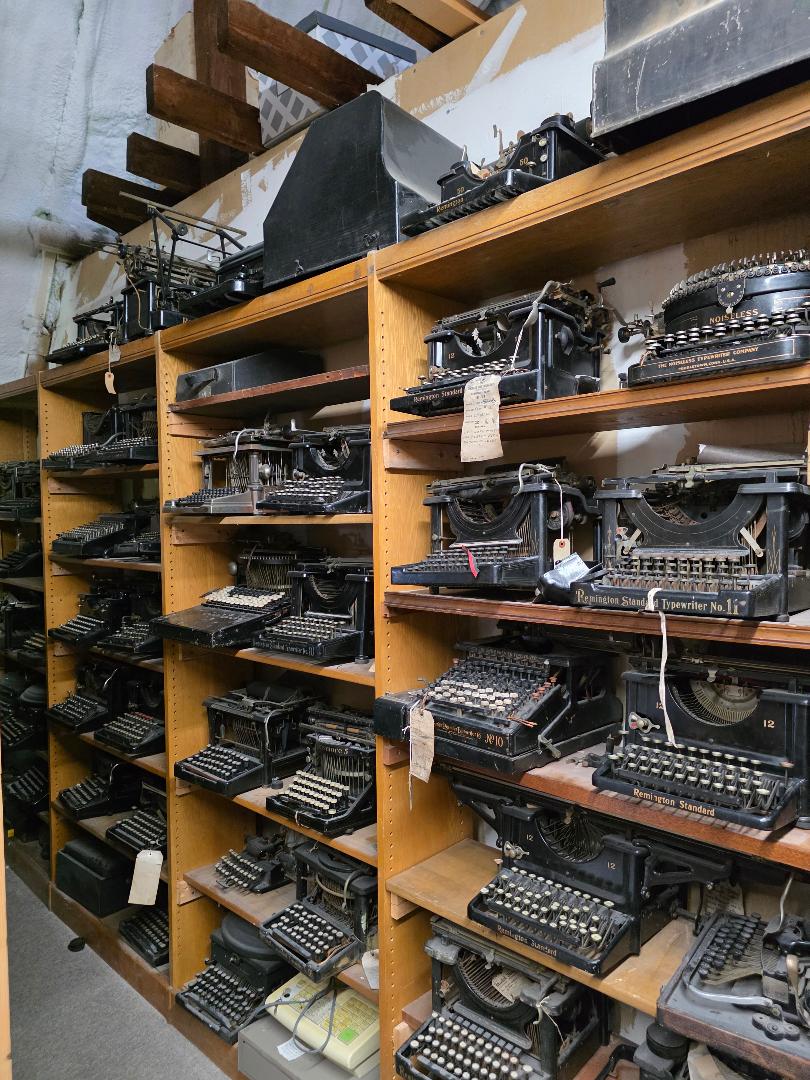
The Erie Canal caused the development of large valley villages and provided a means to transport goods east and west. The oldest Herkimer County industry, Remington Arms, still plays a major role in the county’s economy. During the last 200 years, many products were produced in Herkimer County including rifles, typewriters, farm equipment, furniture, textiles, shoes, data recorders, bicycles, nutcrackers, paper, and dairying equipment. Immigrants from Ireland and later from eastern and southern Europe arrived to work in local industries and agriculture, providing a diversity of culture.

First a part of Albany County, this area was set off as Tryon County in 1772. Later changed to Montgomery County, it was still too large and Herkimer County was cut off and established in 1791. Later additions and subtractions were made until 1817 when Herkimer County assumed its present form.

Herkimer County is a treasure trove of history and scenic beauty, a great place to visit and a wonderful place to live.

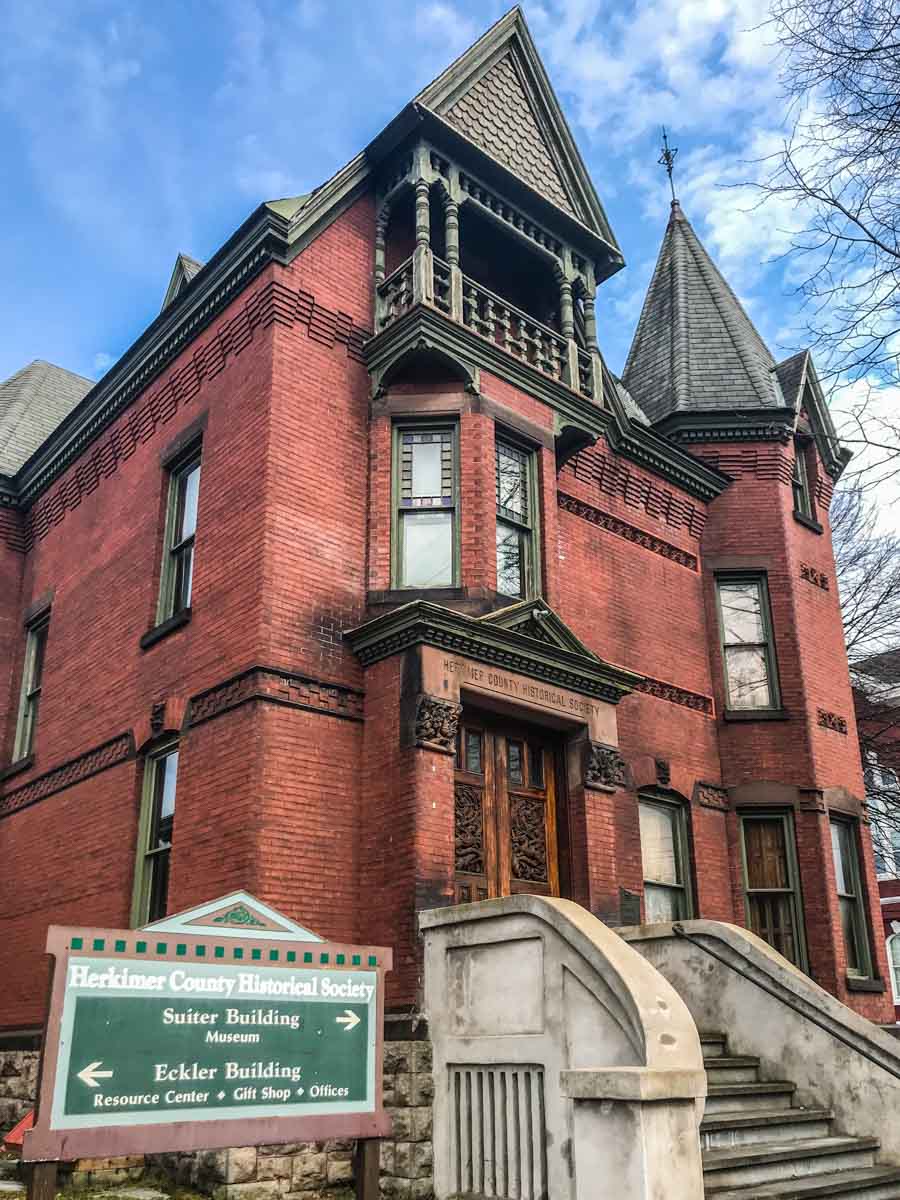
THE 1884 SUITER MUSEUM BUILDING

A Queen Anne style building located at 400 North Main Street in  Herkimer. This building was a legacy to the Herkimer County Historical Society in 1925 by Dr. A. Walter Suiter, a prominent citizen and physician. It was named in memory of Dr. Suiter’s parents, Col. James A. Suiter, a noted Civil War veteran and Catherine Bowers Suiter. The property was purchased by Dr. Suiter at auction for $2,000 in 1867. Construction did not begin until 1883, but planning began at least a year earlier. In May of 1883, Dr. Suiter contracted with Maria Bates to partially dismantle the existing wooden structure and “clean the stone and bricks for use in new work”. Bates and her husband, Charles who is listed as a mason and builder in Herkimer in 1886 was to have the house completed by April 1, 1884. Adolphus Simmons from Utica, NY was the architect, and he designed the structure and the detailed interior specifications. 

The interior of the house closely follows the dictates of the American Eastlake design. Charles Eastlake was an English architect and designer. He became the most popular supporter of a reform movement in interior furnishings with the publication of :Hints on Household Taste.” There are decorative hinges, burl veneer door panels and reticular banisters and newel posts with incised decoration. The woods used throughout the house are: Oak, Cherry, White and Birdseye Maple, Ash, Mahogany, Birch.

The most elegant room in the Suiter building, and the only one with a mantel that was completed in Dr. Suiter’s lifetime is his Study. The mantel combines elements of the Eastlake style and earlier revivals.

The house has never been lived in, Dr. Suiter used the Study and the back two rooms as his waiting room and patient examination room.  He and his Sister, Mary, lived in the house at the end of Court St. until their passing. The Historical Society officially moved into the building in 1938 from the Earl Library.

The massive doors which Dr. Suiter ordered for the entrance to his mansion were built of mahogany. The griffin is one of two which grace the ornately carved front doors. The interior architectural elements are fashionable for the 1880’s and include decorative hinges, burl veneer door panels and rectilinear banisters and newel posts with incised decoration.

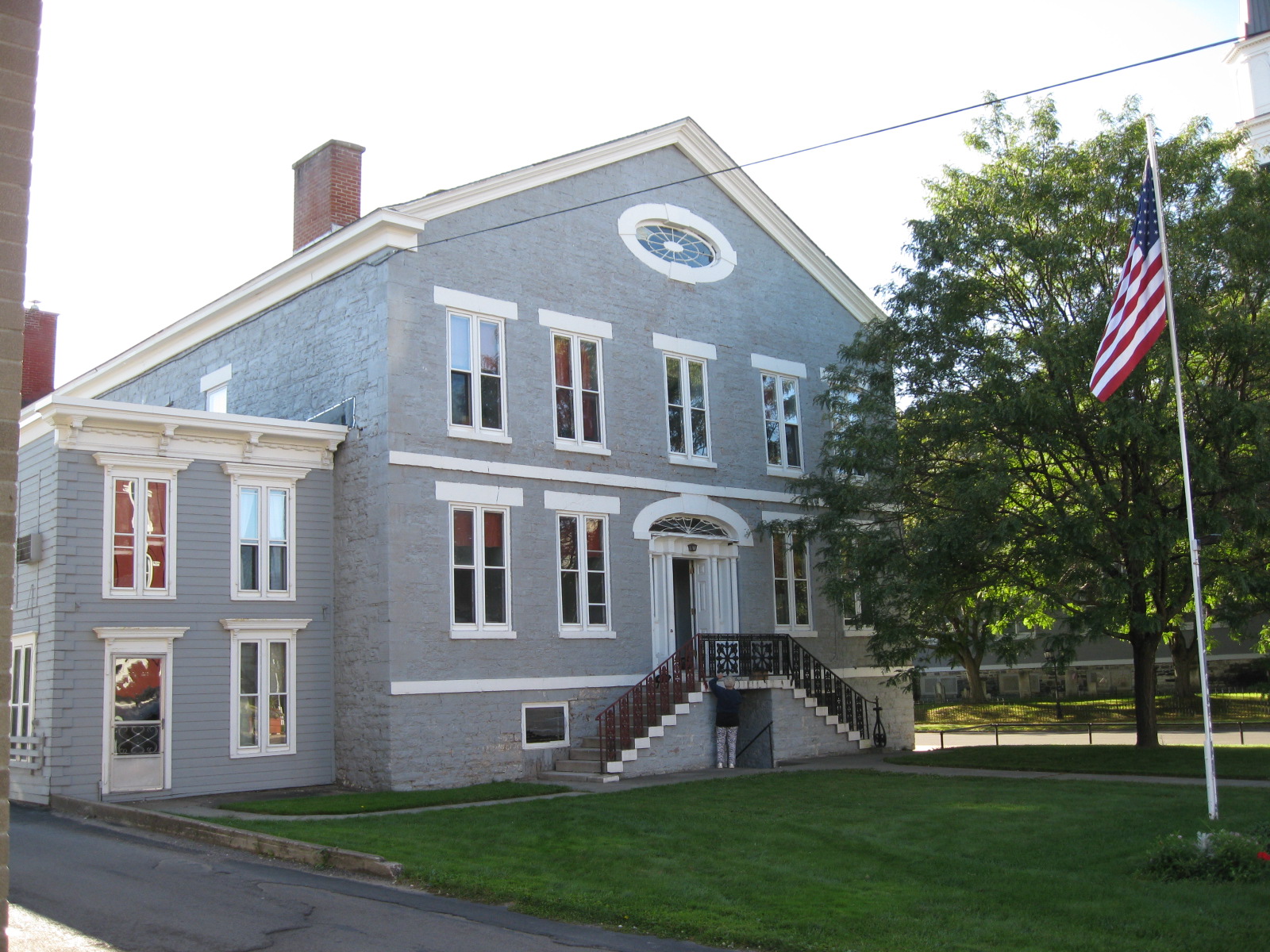
THE 1870 ECKLER HOUSE

The 1870 Eckler House is Italianate in style and is located adjacent to the Suiter building. This is where the Society’s offices are located as well as our Resource Center/Library and Gift Shop. This building was named after the Eckler family who were major contributors to our capital campaign project when we purchased and refurbished it in the late 1980s.

Snell Cabinet

A nice feature in the building is the Snell cabinet showcasing a variety of artifacts from the Society’s collection. Currently there is a display featuring the findings from an archaeological dig we conducted in 2015 on our property searching for any remnants of Fort Dayton. What we did find was an old well that dates back to the early 1800s. There was a treasure trove found inside that well of medical instruments, pharmaceutical bottles, many intact and some with the medicine still in them, a pristine jug and unique liquid soap dispenser – all dating to the late 1800s and early 1900s. Around the property we discovered pipe stems with a few dating to the late 1700s.

1834 HERKIMER COUNTY JAIL

The 1834 Jail is still owned by the Herkimer County government, but is operated by a new organization that has formed to save the Jail – Friends of Historic Herkimer County. Restoration work is currently being undertaken by the small, all-volunteer group and tours to individuals are not available on a regular basis.

Visit Friends of Historic Herkimer County on Facebook

It was built in 1834 under the supervision of Sheriff Francis Elias Spinner (1802-1890), who later would become the Treasurer of the United States under President Abraham Lincoln.

1873 HERKIMER COUNTY COURTHOUSE

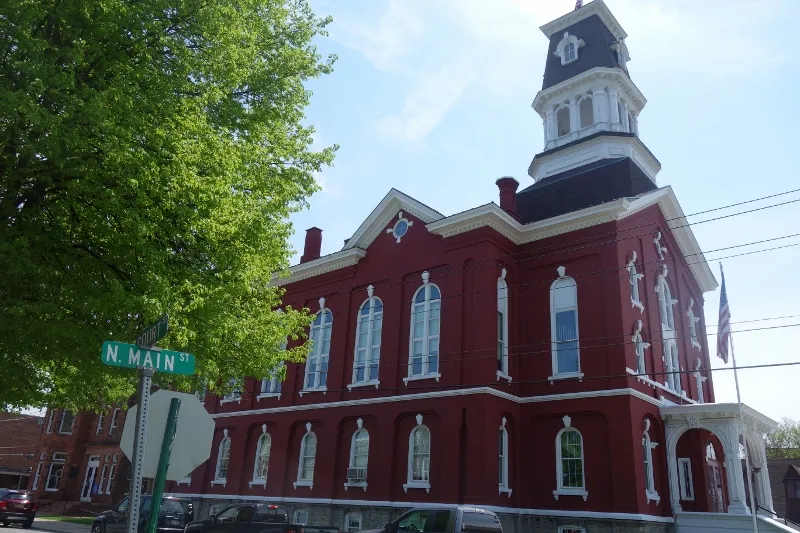
The 1873 Courthouse is still in the property of the Herkimer County government and acts as the headquarters for the Sheriff’s Department and other County offices. It is the site of many court trials, including the famous 1906 Gillette trial. The courtroom is still intact and can be seen during the County’s open hours and on guided group tours.

1834 REFORMED CHURCH

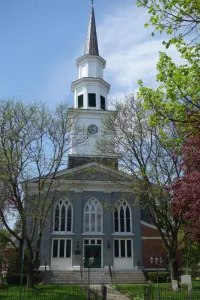
The 1834 Reformed Church was the church to many early residents in Herkimer and still continues in operation today. It houses one of the last remaining Tiffany walls that was restored several years ago. The old churchyard is the burial spot for many of the early Palatine family members who settled the area in the late 1700s.

SCHEDULE A GROUP TOUR
School and group tours are offered by calling (315) 866-6413.

Start donating poor people

children need your help by donating today

Meet Our Volunteer
Team members

Start donating poor people

Frequently Asked Questions

It is a long established fact that a reader will be distracted by the readable the a content of a page when looking at its layout. Many desktop publishing packages and web page editors.


It is a long established fact that a reader will be distracted by the readable the a content of a page when looking at its layout. Many desktop publishing packages and web page editors.

It is a long established fact that a reader will be distracted by the readable the a content of a page when looking at its layout. Many desktop publishing packages and web page editors.

It is a long established fact that a reader will be distracted by the readable the a content of a page when looking at its layout. Many desktop publishing packages and web page editors.

Our valuable customer
Awesome Feedback

Charity is the voluntary act of giving help, typically in the form of money, time, or resources, to those in need. Charitable organizations aim to solve social, environmental, and economic challenges by addressing issues like poverty
Michel Smith

Cloth Store Inc.

Charity is the voluntary act of giving help, typically in the form of money, time, or resources, to those in need. Charitable organizations aim to solve social, environmental, and economic challenges by addressing issues like poverty

Michel Smith

Cloth Store Inc.

Charity is the voluntary act of giving help, typically in the form of money, time, or resources, to those in need. Charitable organizations aim to solve social, environmental, and economic challenges by addressing issues like poverty

Michel Smith

Cloth Store Inc.

Charity is the voluntary act of giving help, typically in the form of money, time, or resources, to those in need. Charitable organizations aim to solve social, environmental, and economic challenges by addressing issues like poverty

Michel Smith

Cloth Store Inc.

Start donating poor people

Send Us message For donation!

    0
    YOUR CART
    • No products in the cart.